
Eads Warrant Checks
Start with whatever paper you have. The citation, summons, bond paperwork, or an earlier notice names the venue, and that decides where an Eads warrant question goes. Town ordinance and municipal traffic matters belong to Eads Municipal Court. Felonies, state misdemeanors, petty offenses, and state traffic matters go to the District or County Court function at the Kiowa County Combined Court. Before you call, gather the full legal name, date of birth, case or ticket number, likely court, and the approximate missed date. Staff need those details to pull the right file, since similar names cause mix-ups in Kiowa County records.
- Read the paperwork and decide whether it names Eads Municipal Court or a Colorado state court.
- For an Eads municipal matter, call 719-438-5590 and ask directly about a failure-to-appear or bench warrant.
- For a state matter, use the official docket for case context, then call the Combined Court clerk at 719-931-6010.
- Call the Kiowa County Sheriff at 719-438-5411 for countywide routing and possible law-enforcement confirmation.
- If a warrant is confirmed, ask the issuing court about reset, appearance, payment, bond, or attorney coordination before traveling.
Eads Warrant Court Contact
The sheriff's local-information page lists Eads Municipal Court at 110 West 13th Street, Eads, Colorado 81036. The phone is 719-438-5590 and the fax is 719-438-5652. Hours run Monday through Thursday, 8:00 a.m. to 4:30 p.m., and the office closes Friday, so call before driving over. When you reach the clerk, ask three things: whether the court holds the cited case, whether a warrant has issued, and whether the next step is payment, a reset, a new appearance, or a motion before the municipal judge.
Treat this as a contact source, not a warrant roster for Eads. There is no name search, warrant-number field, bond schedule, or live status. The phone line matters. A municipal bench warrant may never show up on a state docket or a sheriff web page, so the Eads clerk's answer is the one that counts.
Policing and Courts in Eads
Eads runs no separate police-department warrant portal. The Kiowa County Sheriff carries countywide law-enforcement responsibility, so do not assume some city police database waits to be searched. Instead, three offices hold three different roles. The municipal court handles its own ordinance and traffic cases. The sheriff may know about service or routing. The Combined Court keeps the Colorado state-court matters. These jobs overlap in practice, but they are not interchangeable record systems in Kiowa County. So ask each office a question suited to its role. Ask the municipal clerk whether an Eads municipal case has a bench warrant and what the judge requires. Ask the Combined Court clerk about a state case, hearing, or record. Ask the sheriff whether the office can confirm service information and which court or holding county applies. Court staff may explain procedure, though they cannot give legal advice.
Eads Warrant Courts Side by Side
Eads is the county seat, and both relevant court locations sit inside it, yet the venues and their jurisdictions stay separate. Eads Municipal Court at 110 West 13th Street handles town matters. The Kiowa County Combined Court at 1305 Goff Street handles the District and County Court functions, and its official page lists 719-931-6010. Public hours are Monday through Thursday, 8:00 a.m. to noon and 12:30 p.m. to 4:30 p.m. The page tells callers to contact the court before proceeding with any court business, so use the phone first.
| Paperwork clue | First contact | Question |
|---|---|---|
| Eads ordinance or municipal ticket | Eads Municipal Court | Did an FTA or bench warrant issue? |
| State traffic, petty offense, or misdemeanor | Combined Court | What is the current case and warrant status? |
| Felony case | District Court clerk | What appearance or attorney process applies? |
| Unclear source or service question | Kiowa County Sheriff | Which issuing office and holding location apply? |
Warrants in Eads: The Main Types
The document and the venue that issued it set the warrant type. Colorado materials use "bench warrant" for a warrant issued after a failure to appear. A search warrant is different: it authorizes a search and is not a self-check arrest record. An out-of-county warrant must be verified with its own issuing jurisdiction, even if the person is presently in Eads.
| Warrant Type | How It Arises | Who Issues It |
|---|---|---|
| Traffic warrant | Missed Eads municipal or state traffic setting | Municipal or County Court |
| Ordinance warrant | Unresolved town-code case or missed appearance | Eads Municipal Court |
| Bench warrant | Failure to appear after a summons or complaint | Municipal, County, or District judge |
| Arrest warrant | Complaint, information, indictment, or probable-cause process | State judicial officer |
Eads Citation Payment Is Not Recall
The sheriff links to a GovPayNow citation form. It asks for the defendant's first, middle, and last name, ticket or case number, telephone, address, and payment amount. A service fee may be calculated before payment information is requested. Those fields support a payment transaction only. They do not search Eads warrants, and paying does not establish that a judge recalled one.
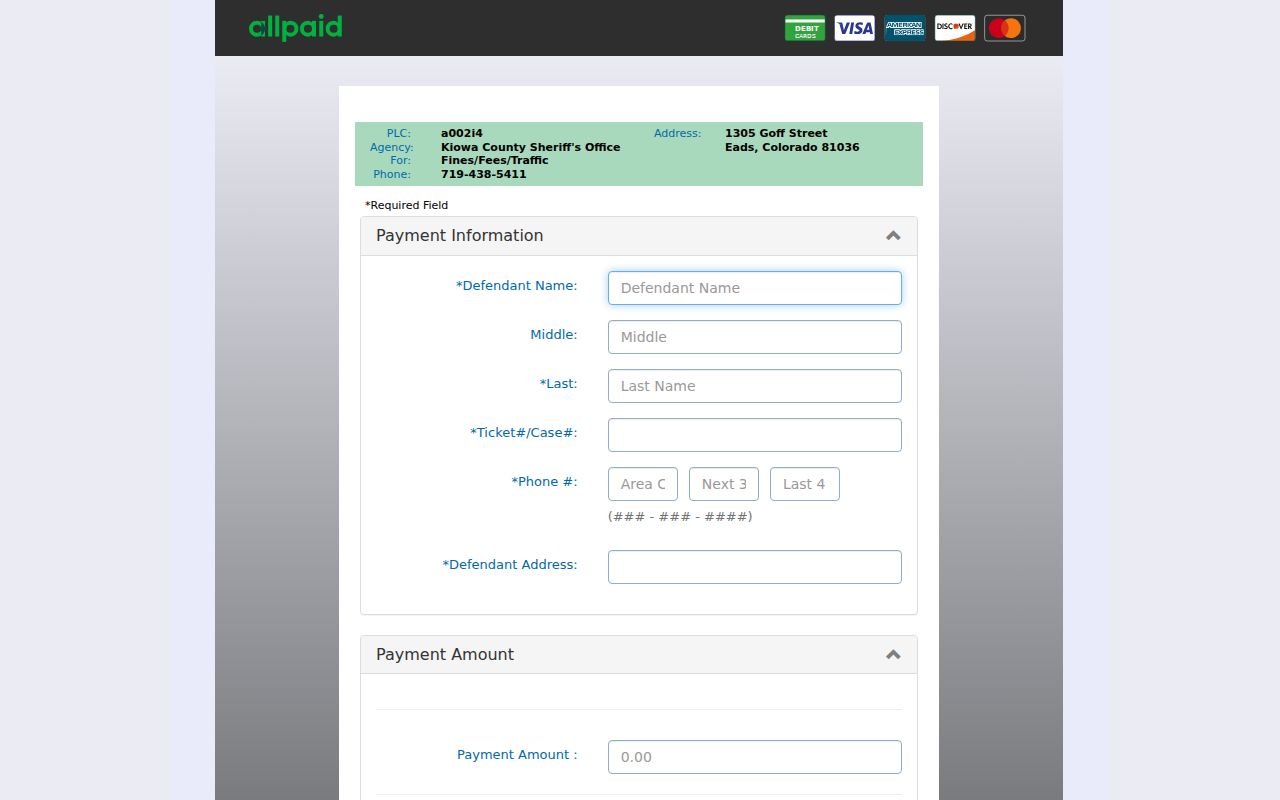
Payment is not recall. If a date was missed or a warrant is suspected, call the issuing court before paying. Keep the receipt, then ask whether the financial obligation and any separate failure-to-appear warrant have both been cleared.
The sheriff FAQ says Kiowa County does not offer a defensive-driving course as a deferment option. A court may allow deferment based on the driving record at its discretion, while fines and surcharges generally remain. That is a local case-process fact, not an Eads warrant-search service.
Eads Warrant Records: What They Show
No official Eads page publishes a sample warrant entry, local number format, or status-code list. So do not infer an Eads prefix from a statewide form. A court record may identify plenty: the issuing court, case or citation number, subject, charge, scheduled appearance, failure-to-appear event, judge, bond or release instruction, issuance date, and service return. Some details can be redacted, sealed, or simply unavailable.
| Case or Warrant Number | Use the identifier exactly as the court provides it; no Eads-specific format is published. |
|---|---|
| Subject Name | Identity tied to the court file, checked with DOB or other data when permitted. |
| Charge or Offense | The alleged ordinance, traffic, misdemeanor, or felony basis. |
| Issuing Court | The key field separating Eads Municipal Court from County or District Court. |
| Bond or Fine | Case-specific amount or conditions, if public and set by the court. |
| Status | Active, served, recalled, quashed, or cleared only as the maintaining office defines it. |
Confirming an Eads Warrant Resolution
Follow whatever instruction the court gives for that case. It may involve a new date, payment, an appearance, a motion, arrest and bond, or an attorney-coordinated walk-through. After you act, get something concrete. A receipt, next-date notice, bond paperwork, recall or quash order, or docket entry all prove the step happened. Then ask when the status system will update and which office can confirm the change in Eads.
- Record the court name, case number, instructions, and date of the call.
- Complete only the payment, appearance, motion, or bond step the issuing court authorizes.
- Retain every confirmation number and written document.
- Call the court again and ask whether the warrant itself is no longer active.
- If service records matter, ask the sheriff whether its record reflects the court action.
No official source publishes a guaranteed Eads status-removal timetable. Clearing a warrant also does not erase the underlying case, and record-sealing questions stay separate from warrant resolution.
Eads Warrants and Kiowa County
In Eads, two courts can sit behind one warrant. A municipal warrant starts in the town court. A state warrant comes from the Colorado District or County Court at the Combined Court. The sheriff works countywide and either serves the warrant or points you back to the court that issued it. Colorado publishes no single statewide warrant database, and the Judicial Branch docket is a calendar aid, not a warrant registry.
Warrant flow: Eads Municipal Court or Combined Court › Kiowa County Sheriff › issuing court confirmation
For the fuller court-and-sheriff route, start with the Kiowa County warrant records overview. An Eads ticket or a missed traffic date raises its own issues. The Kiowa County traffic warrant process explains why payment and recall must be confirmed separately.
Eads Booking Is Not Local
Kiowa County runs no jail of its own, per the sheriff's services page. That reshapes what to ask before a voluntary appearance in Eads. County meeting records note a Bent County Jail Agreement. Bent County does publish 24-hour jail and dispatch operations. None of that settles where any given Eads arrest lands, so the sheriff must identify the facility for the particular case.
Before you drive anywhere, get answers. Ask where booking would happen, who takes a bond payment, whether bond is already set, and whether counsel can arrange a walk-through. The sheriff's bonding material sends payment to the holding county, never to a person. It lists a $10 bond fee. Card fees top out at 3.5 percent. A six-hour release rule applies in specified circumstances, and Eads publishes no special surrender window or bond counter.
Eads Docket and Document Channels
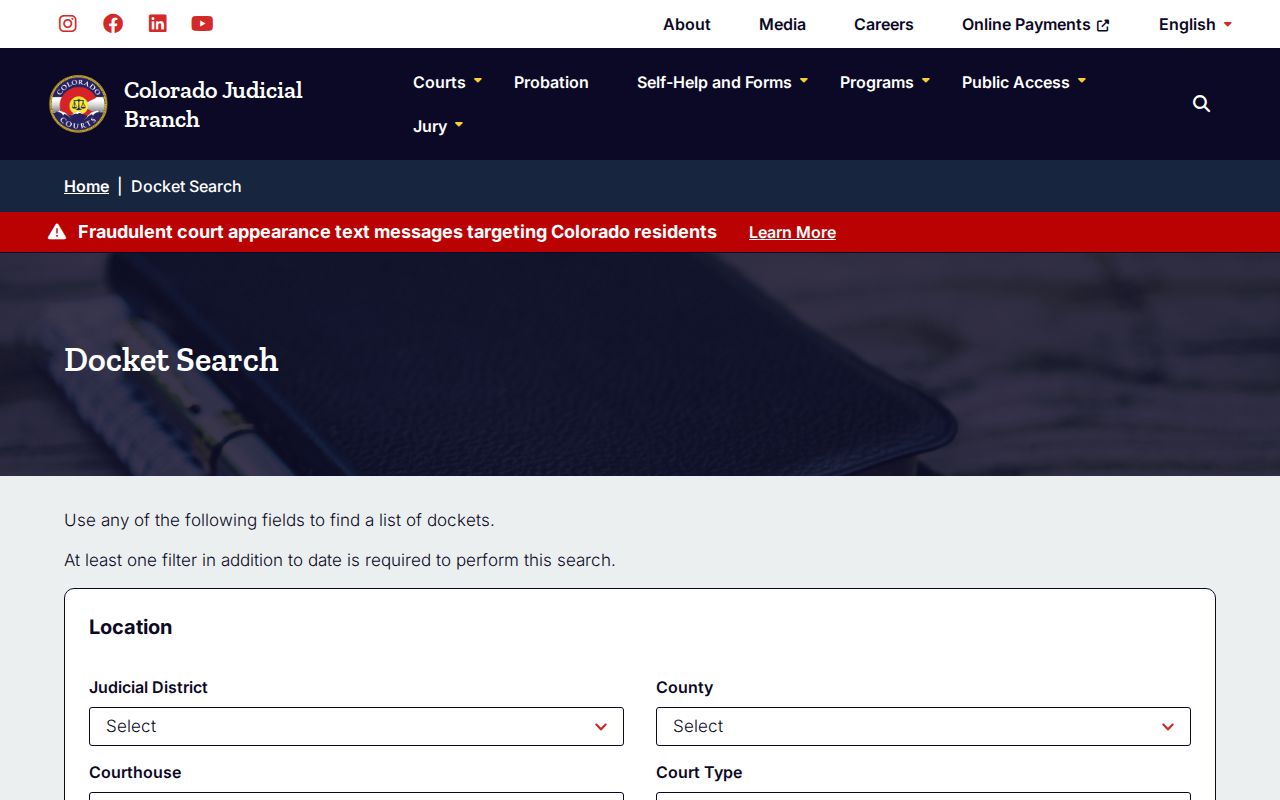
The Colorado Docket Search filters by judicial district, county, courthouse, court type, division, date, case number, party, and attorney. It demands a date plus one more filter. Choose the 15th Judicial District and the Kiowa location. Still, call the clerk at 719-931-6010 for current warrant status. A docket can omit sealed, confidential, recent, or non-docketed matter, so it never clears an Eads case on its own.
Documents follow a separate form. The Judicial Branch request takes county, case number, case type, filing year, date of birth, primary party, and document choices. Ordinary responses arrive within three business days unless circumstances intervene. Kiowa requests route through Clerk of Court Lana Lawrence, reachable at the judicial email on the county request page. Know the limit. A document request is not a live clearance check, so pair it with a clerk call on any Eads warrant.
Accessing Eads Warrant Records
Who holds the file depends on which office made it. The Combined Court controls its own records. Eads Municipal Court keeps the municipal ones. The sheriff applies its records policy to law-enforcement material. Release can turn on record type, investigation and trial status, a judicial order, privacy protections, or a juvenile matter, so an Eads requester may get a redacted copy or a referral to counsel or the court.
Key Rules:
Colorado Criminal Justice Records Act, C.R.S. 24-72-301 et seq. - governs inspection and release decisions for criminal-justice records, together with CORA where applicable.
Chief Justice Directive 05-01 - sets access policy for Colorado Judicial Branch court records and recognizes protected material.
C.R.S. 19-1-304 - limits public access to juvenile records and information.
The sheriff warns that ongoing cases, victims, juveniles, at-risk adults, and other protected information can affect release. Expect a written form from the office. Prepayment, a self-addressed stamped envelope, and a 72-hour wait all apply. Fees show differently across official pages, so an Eads requester should confirm the charge before submitting.