
How Arrest Warrants Work in Kiowa County
Colorado draws a line between two tools. An arrest warrant follows a criminal accusation; a bench warrant follows a missed court duty. After an information, indictment, or felony complaint is filed, a prosecutor may ask the court for a warrant or a summons under C.R.S. 16-5-205. A judge then weighs the legal basis. Approval turns the paper into a command: any officer authorized by law must make the arrest. When the alleged offense is bailable, the court can endorse bail right on the warrant. Where the record lives depends on the charge. Felony arrest-warrant records sit in the Colorado District Court, 15th Judicial District, at the Kiowa County Combined Court. County Court, in the same building, handles misdemeanors, petty offenses, traffic cases, and initial matters. The state legal glossary defines a warrant as a judge's order authorizing arrest or search, and that order is what starts the legal process in Kiowa County.
Kiowa County Arrest Warrant Visibility
Kiowa County keeps its records with two offices. The Sheriff holds criminal-justice records from sheriff work, and the Clerk of Court keeps the District Court and County Court case files. Pick the right office for what you need. If you want the signed warrant, the charge filing, a bond order, or the return, that is clerk business. If you want a sheriff incident report or a record of service, ask the sheriff which form and fee apply. A sheriff report request follows office policy: a written form from the office, correct prepayment, a self-addressed stamped envelope, and a 72-hour wait after you submit it. Release still depends on the report type, the investigation and trial status, and the ages or roles of the people involved. The court route uses the Judicial Branch form, and suppressed, juvenile, probate, or other protected material can require identification. Keep the two paths separate. There is no official Kiowa County arrest-warrant list or search form. The sheriff's site offers records, citation, bond, tip, and court links but no roster, and Colorado has no single public statewide warrant database. Docket Search is a hearing calendar, not a warrant-status tool, so a blank result there proves nothing about an active warrant.
Key point: No online result does not prove that no Kiowa County arrest warrant exists.
Not every warrant record is open. Juvenile material, active investigations, and protected items can be sealed by statute, rule, directive, or court order. Ask the Kiowa County clerk whether a record is public and what proof of identity to bring.
Arrest Warrants: What They Contain
Kiowa County publishes no sample warrant, so a redacted Colorado warrant is the best model of what to expect. It shows a warrant can name the court, the criminal action, the judge, the charge, the sworn basis, bond terms, the issue time, and the service return. Public copies may still hide identity, juvenile, or investigative details.
| Court and case | County, court, criminal action number, warrant title, and judge. |
|---|---|
| Person and charge | Name, possible aliases and descriptors, offense date, charge, statute, and class. |
| Legal basis | Probable-cause certification and command to the executing officer. |
| Release terms | Bond amount, type, and conditions endorsed by the court. |
| Issue and service | Issue time, signature, agency case number, and return-of-service fields. |
Kiowa County sources publish no local warrant-number pattern, so use the exact number on the court record.
Kiowa County Arrest Warrant Probable Cause
Probable cause means reasonable grounds to believe an offense happened and that the named person is connected to it. An affidavit is a sworn statement laying out those facts. A judge's signature is judicial authorization, not a finding after trial. The warrant may cite a state statute and classify each charge. Access to the affidavit can differ from access to the warrant face. The Judicial Branch access guide explains that statutes, court rules, Chief Justice Directive 05-01, court orders, and public-interest grounds govern disclosure, and a clerk may release the public part while withholding protected material. When you request, name the case and the exact document. If the clerk says the affidavit is not available, ask whether the warrant face, register of actions, charge document, bond order, or return of service can be released instead. A focused request lets the Clerk of Court apply the correct rule without treating a docket calendar as the official record. It also keeps your question tied to a known Kiowa County court case.
How Warrants Get Served in Kiowa County
The Kiowa County Sheriff's Office is the countywide law-enforcement agency, but it posts no warrant squad or service schedule. Any authorized officer can execute a warrant: a city officer, a state patrol trooper, another county, or someone else entirely. Service may happen at a traffic stop, an unrelated police contact, or a planned surrender. No walk-in window is published. Call 719-438-5411 before you travel. Ask which court issued the warrant, who will execute it, and where booking will occur. The sheriff's services page notes that Kiowa County does not operate a jail. A Bent County agreement is documented, so confirm the actual holding place for your case.
Kiowa County Arrest Warrant Confirmation
Before you call anyone in Kiowa County about a possible warrant, gather the details that narrow a search: full legal name, date of birth, any alias, a case number, the likely court, and the approximate date. Those identifiers help, though no office publishes a required form for asking. You can ask the sheriff whether it will confirm a warrant for you or a relative. Dispatch is not the place for routine questions. Save 911 for true emergencies. For the office that actually answers warrant questions, call the Kiowa County Combined Court at 719-931-6010. The Clerk of Court keeps the district and county criminal case files. The court sits at 1305 Goff Street in Eads and asks people to phone for instructions before coming in. Note: the sheriff handles service questions, while the issuing judge alone controls recall, bond, and the next court step.
Arrest Warrants, Summonses, and Bench Warrants
Kiowa County papers come in three flavors, and each one asks something different of you. An arrest warrant orders custody outright. A summons just tells you to show up on your own. A bench warrant comes from the judge, usually after someone missed an appearance they were required to make.
| Feature | Arrest warrant | Summons | Bench warrant |
|---|---|---|---|
| Core act | Commands arrest | Directs appearance | Commands arrest after a court failure |
| Typical basis | Complaint, information, indictment, or affidavit | Charge handled without initial custody | Failure to appear or comply |
| Response | Confirm, seek counsel, plan surrender and bond | Attend as ordered | Ask the issuing court about reset or recall |
Ignore a served summons and C.R.S. 16-2-110 lets the judge issue a bench warrant. That route differs from the probable-cause path a Kiowa County arrest warrant takes.
Kiowa County Arrest Warrant Documents
Court context, not warrant status, is what the Colorado Docket Search provides. You can query it by district, county, court type, date, case, party, or attorney, and it still cannot confirm whether a Kiowa County warrant is active. For the paper itself, file the official request form. Pick Kiowa County, then supply the case number, filing year, case type, party name, and date of birth where you have it. The form is a document channel, not a live warrant database.
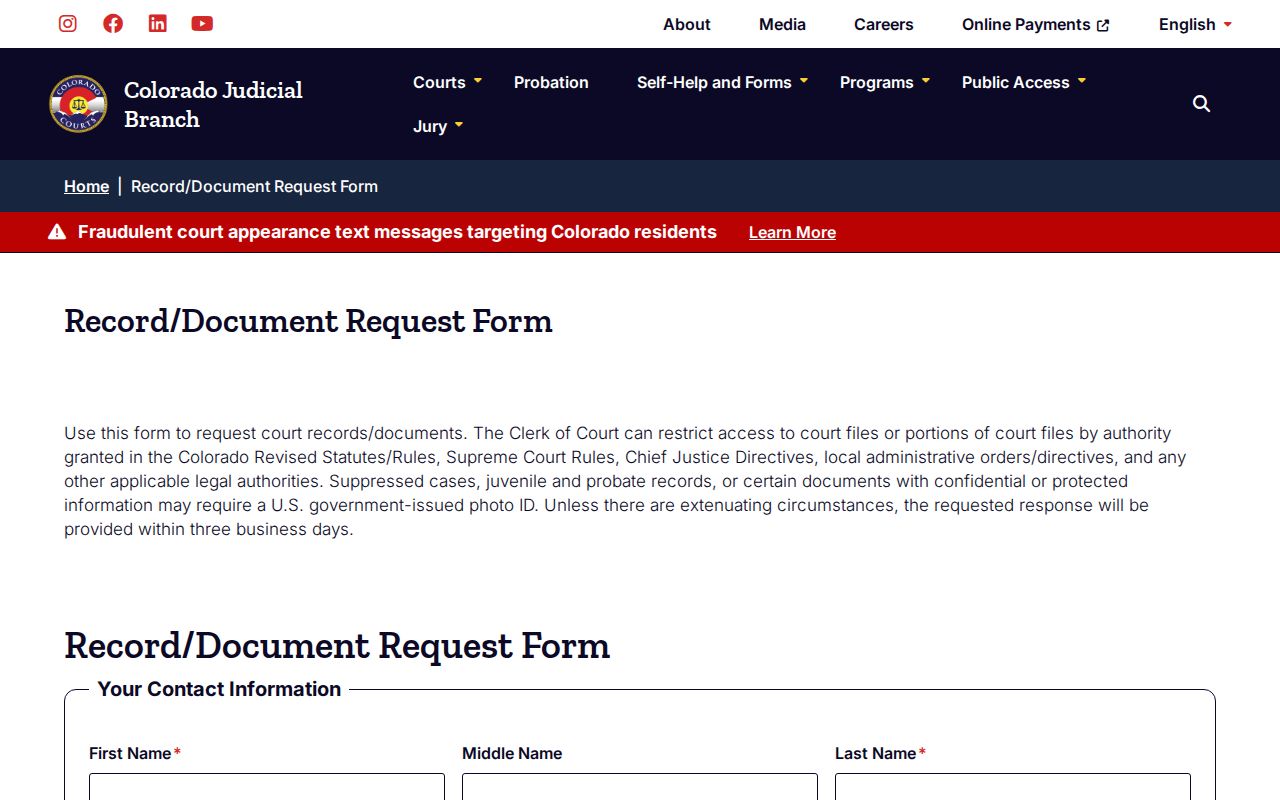
Expect roughly three business days, per the Kiowa County request page, which sends filings to Clerk Lana Lawrence.
Kiowa County Arrest Warrant Bond
Kiowa County has no jail of its own, and that shapes everything about turning yourself in on a warrant. County records point to an agreement with Bent County Jail, and Bent County does publish a 24-hour jail contact number. Even so, do not assume every Kiowa County arrest lands there. Ask the Kiowa Sheriff to confirm the facility for your case before you go anywhere. Get four answers in writing if you can: who transports you, which holding county takes the bond, whose name goes on the payment, and when a bond hearing can happen. The 15th Judicial District Kiowa page does list Saturday bond hearings at 4:00 p.m., but a listing is not a promise that your warrant uses that session. A quick call to the court and sheriff beats a trip to the wrong jail and a check written to the wrong payee. An arrest warrant itself may spell out the bond amount, type, and conditions, and those terms are case-specific. The sheriff publishes no fixed bond schedule for warrants. Its bond page says only that the full amount must be paid to secure release on a money bond and that payment goes to the holding county. Two extra charges may follow you as debt even after release: a $10 bond fee and a card fee capped at 3.5 percent. Posting bond buys release and a promise to appear, nothing more. It does not end the case. Grab your bond papers and the next court date before you leave, and ask when the warrant gets marked served. Because Kiowa County lacks a jail, settle the facility and payee first. The county government sheriff contact below is a safe starting point for confirming the right office and phone number.
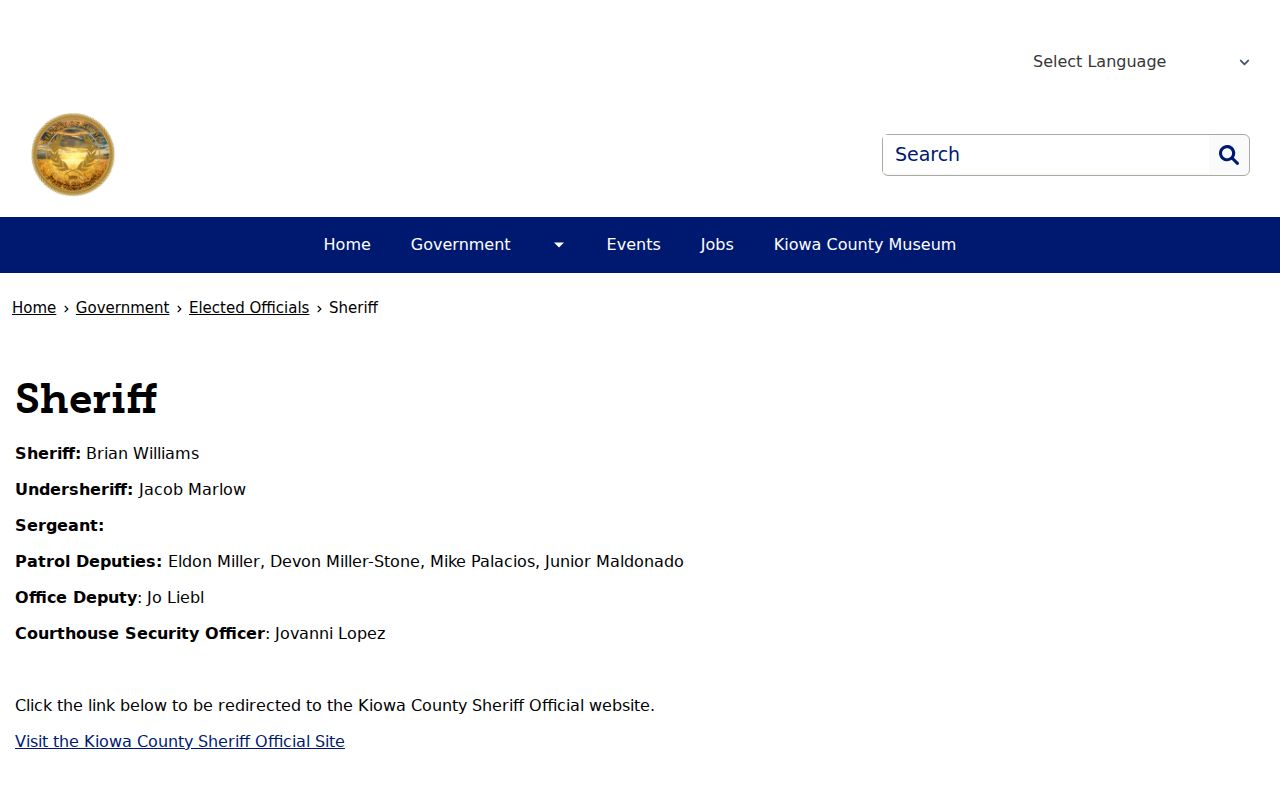
Use the official phone shown there, not an unsolicited payment message.
Handling an Arrest Warrant in Your Name
Your first calls go to the court and the sheriff. A lawyer can verify warrant status, ask whether Kiowa County allows a voluntary appearance or walk-through, review the bond terms, and push to recall or quash the warrant when the law permits. Recall means the court withdraws it. Quash means the court sets it aside.
- Confirm the court, case number, type, and active status.
- Ask whether counsel can arrange an appearance and whether custody is required.
- Confirm the holding county, booking place, bond type, amount, and payee.
- Attend court and keep the bond paper, next date, or signed recall order.
- Ask when court and sheriff records will show the change.
Act carefully: Speak with a lawyer before surrender, and verify all booking and bond instructions with the court and sheriff.
Paying is not the same as recall in Kiowa County, so keep written proof and show up for every court date that follows.